

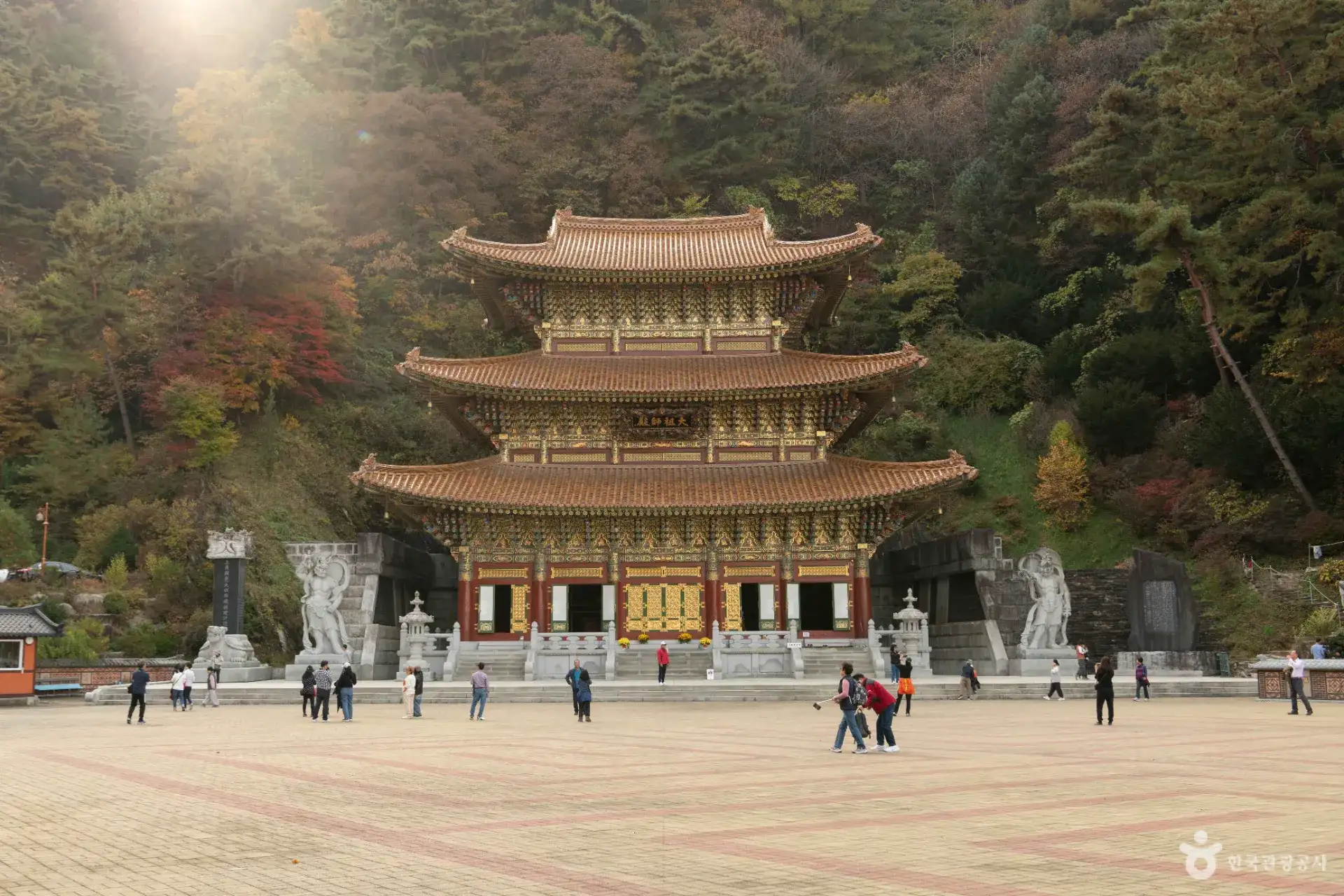
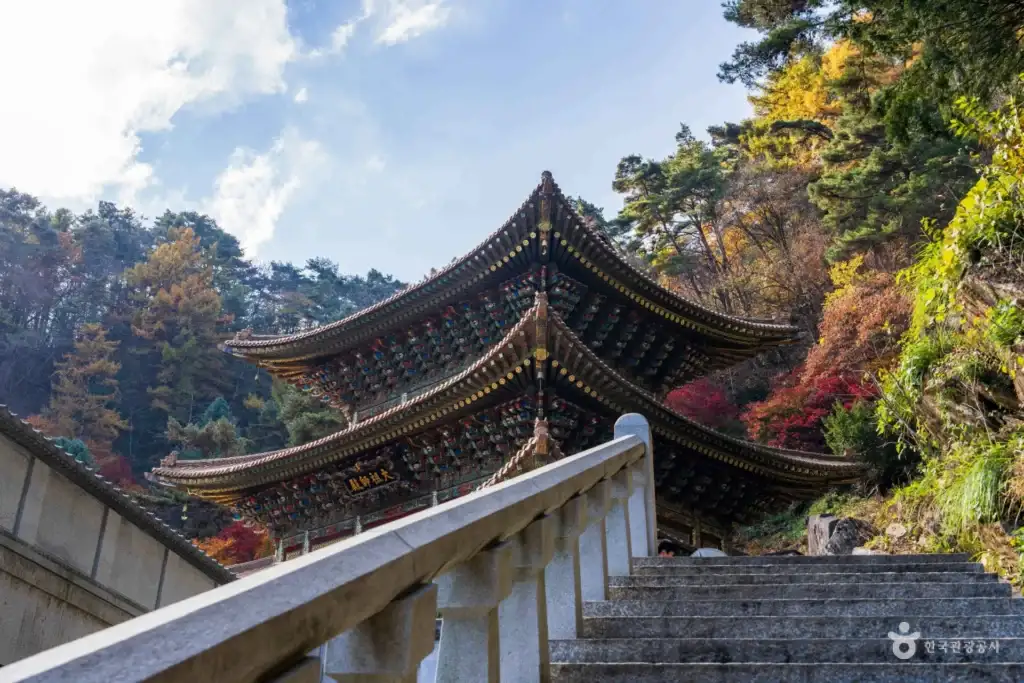
Guinsa Temple is one of the most striking Buddhist temples in Danyang. Set deep in a mountain valley, it feels larger and more dramatic than many temple sites in Korea. If you want a destination that combines mountain scenery, religious atmosphere, and a powerful sense of scale, this is a place worth visiting.
What makes the visit memorable is the setting as much as the buildings. The temple rises along the slope rather than spreading out on flat ground, so the view changes as you move upward. That gives the whole visit a stronger sense of movement and depth.
Why this temple feels different
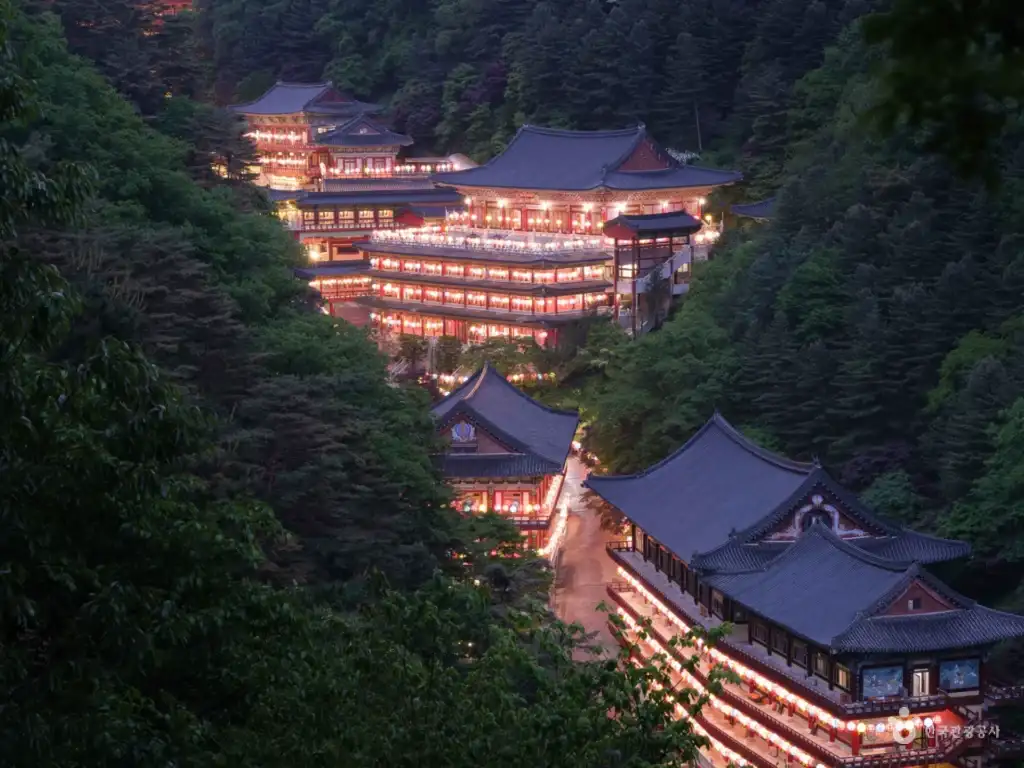
Guinsa is introduced as the head temple of the Cheontae Order of Korean Buddhism. That status alone makes it more significant than an ordinary mountain temple. It is also known for its relatively modern development and very large complex, which gives it a distinct appearance compared with older low-rise temple sites.
Another reason it stands out is the way the buildings follow the valley. Instead of one broad courtyard and a few halls, the complex climbs through the landscape. That makes the site feel more vertical and more layered as you walk through it.

What to notice first
The first thing to notice is the scale of the complex. Even before focusing on individual halls, the overall view makes a strong impression. Large buildings rise along the valley and create a dramatic mountain silhouette.
The second thing to notice is the atmosphere of the approach. Because the temple is set in a narrow mountain setting, the route inward feels focused and immersive. The natural surroundings and the architecture support each other rather than competing for attention.

How to enjoy the visit more naturally
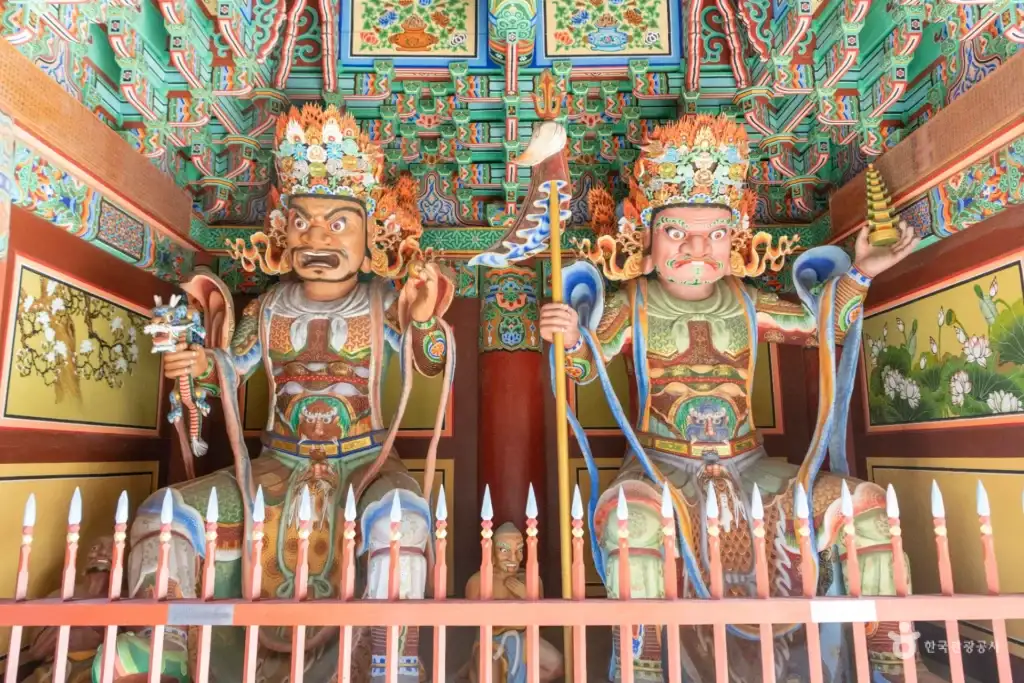
The best way to enjoy the site is to walk slowly and allow the setting to unfold in stages. This is not a place that works best as a quick stop for one photo. The impression grows stronger as you move through the grounds and notice how the buildings and terrain connect.
If you are planning a Danyang route built around scenery and cultural sites, this temple works especially well because it adds a very different mood from lakes, viewpoints, or outdoor tourist areas. It brings a quieter and more contemplative balance to the trip.
Why it stays memorable
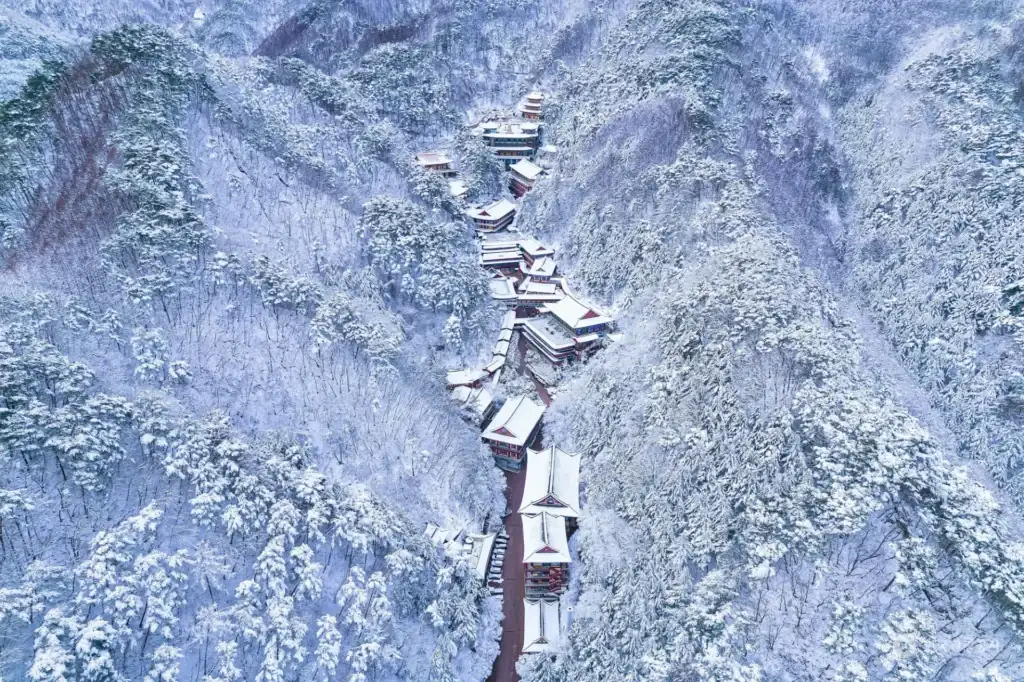
Many temple sites are remembered for age and stillness. This one is memorable for size, setting, and atmosphere together. The mountain valley gives the complex a strong identity, and the temple’s scale makes the visit feel more monumental than expected.
It also stays in memory because the route feels structured. You are not simply standing in front of one hall and leaving. The site builds its impression through movement, elevation, and repeated changes in perspective.
Useful information before you go
Guinsa Temple is located at 73 Guinsa-gil, Yeongchun-myeon, Danyang-gun, Chungcheongbuk-do. Official tourism information lists it as open 24 hours, open all year round, with free admission. Parking is available for a fee. You can check current details on the official tourism guide.
If you are interested in staying longer, Guinsa also operates templestay programs through its official temple stay site. Since program schedules vary, it is best to check separately in advance.
Closing thoughts
Guinsa Temple is one of the most visually powerful temple destinations in Danyang. It offers more than a simple temple stop because the landscape and the architecture create one continuous experience. For travelers who enjoy mountain settings and cultural depth, it is a strong place to include.
It works especially well when you want a quieter but still impressive stop in a Danyang itinerary. Rather than relying on one single highlight, the whole setting leaves the lasting impression.

Leave a Reply
You must be logged in to post a comment.