


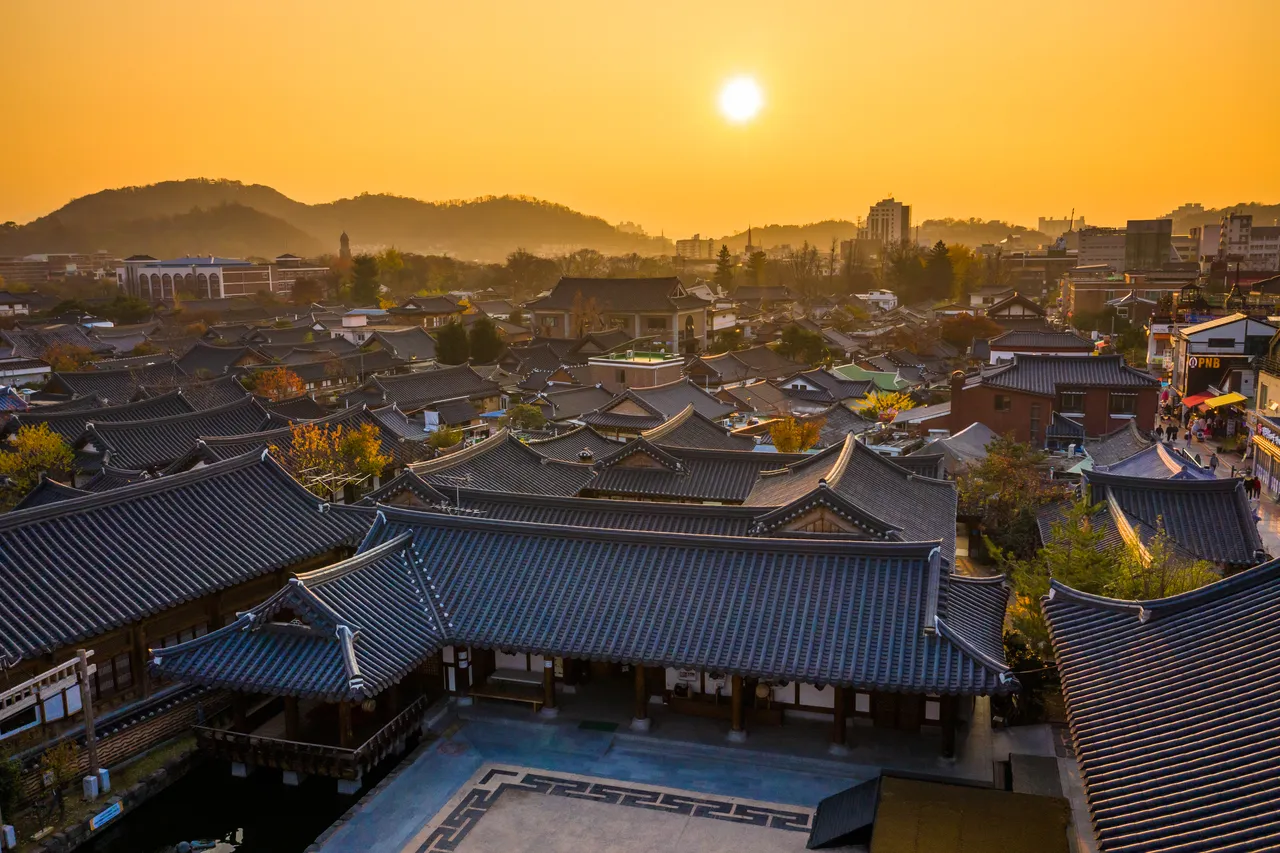
Jeonju Hanok Village is one of Korea’s most representative travel destinations, where you can experience the beauty of traditional Korean culture up close. Around 700 hanok houses are gathered across the Pungnam-dong and Gyo-dong areas of Jeonju, allowing you to experience Korean tiled roofs, alleyway scenery, and the atmosphere of traditional daily life all in one place. This unique landscape is exactly why it is often the first place people think of when they imagine a trip to Jeonju.
Jeonju Hanok Village is not simply a tourist site with many hanok houses. It is the largest traditional hanok village in Korea and is also introduced as the country’s only urban hanok cluster. Its greatest charm lies in the fact that it is a place where the past and present coexist right in the middle of the city.
Why Jeonju Hanok Village Is Special
The first reason Jeonju Hanok Village is special is its scale and atmosphere. With around 700 hanok houses forming a cluster, simply walking through the alleys naturally lets you feel the beauty of traditional Korean architecture. The scenery of curved hanok roofs, courtyards, walls, and narrow lanes is far more impressive in person than in photos.
The second reason is that history and culture come together in one place. Around Jeonju Hanok Village, you can find cultural heritage sites such as Gyeonggijeon Shrine, Omokdae, and Jeonju Hyanggyo, along with cultural facilities like the Jeonju Traditional Culture Center and the Hanok Living Experience Hall. This makes it an ideal place to experience architecture, history, and traditional lifestyle culture all in a single visit.
The third reason is its accessibility and hands-on experiences. Because Jeonju Hanok Village is located within the city, it is easy to get around, and it offers many elements that international travelers find especially appealing, such as hanok stays and traditional cultural experiences. It is a place where Korean traditional culture becomes not just something to see, but something to stay in and truly experience.
The History and Meaning of Jeonju Hanok Village
Jeonju Hanok Village began to take shape around 1910 and is also regarded as an important place that shows the development of Korea’s modern residential culture. Today, it is widely known for its traditional scenery, but it is not simply a place with many old buildings. It is a symbolic space that shows how hanok architecture has survived within Korea’s modern urban landscape.
Jeonju Hanok Village is also closely connected to the historical identity of Jeonju, which is near the ancestral hometown of the Jeonju Yi clan, the royal family that founded the Joseon Dynasty. When visited together with historical landmarks like Gyeonggijeon Shrine, it offers a deeper understanding of the flow of Korea’s traditional urban history rather than being just another tourist attraction.
Must-See Highlights in Jeonju Hanok Village
The greatest charm of Jeonju Hanok Village is the experience of simply walking through its alleys. As you stroll along named paths such as Hyanggyo-gil, Choi Myeonghui-gil, and Gyeonggijeon-gil, you will notice that each alley has its own slightly different atmosphere and expression of hanok architecture. Unlike wide, open tourist plazas, Jeonju Hanok Village reveals more of its charm the more slowly you walk through it.
During the day, the tiled roofs and alleyway scenery stand out, while in the evening, lighting and angel lanterns create a completely different mood. Jeonju Hanok Village is different from a flashy modern city night view. Instead, it offers a much softer and more emotional evening atmosphere, where traditional architecture blends with gentle lighting.
Another notable point is that the hanok here do not feel like static displays, but like living spaces that are still active today. With real accommodations, cultural experiences, traditional tea houses, and craft spaces woven into the village, Jeonju Hanok Village leaves the impression of being not just a village to look at, but a village to stay in.
Why It Is Also Popular with International Travelers
Jeonju Hanok Village is popular with international travelers because its Korean identity is so clearly expressed. Elements people often expect from a trip to Korea—hanok, hanji paper, traditional streets, hanbok experiences, traditional tea, and alleyway walks—are all gathered in one place. This makes it easy to introduce even to first-time visitors to Korea, and it is widely appreciated as a destination that offers high satisfaction in both photography and hands-on experiences.

In particular, Jeonju Hanok Village has a different charm from Seoul’s palaces or large-scale landmarks. Rather than feeling grand like a royal palace, it feels more approachable as a traditional space where the texture of real everyday life can still be felt. For that reason, it is an excellent place to introduce the everyday yet beautiful traditional scenery of Korea.
Places That Pair Well with a Jeonju Travel Course
Jeonju Hanok Village is attractive enough on its own, but linking it with nearby attractions makes the trip even more complete. Gyeonggijeon Shrine, Omokdae, and Jeonju Hyanggyo are representative sites that connect naturally with the village. As you walk through the hanok village, you can also explore Jeonju’s traditional architecture and historical stories, making it an excellent combined course to introduce in blog content for international travelers.
You can also connect nearby places such as Nambu Market, the night market, Youth Mall, and Jaman Mural Village to show Jeonju’s blend of tradition and modern life in a more layered way. For that reason, Jeonju Hanok Village can be seen not just as a single destination, but as the central axis of a Jeonju trip as a whole.
Useful Information to Know Before Visiting
Because Jeonju Hanok Village is an outdoor village-style attraction, it is better to check the operating hours of individual facilities and experience spaces separately rather than thinking of it as one place with a single admission time. You can freely walk through the village itself, but museums, experience halls, shops, and accommodations may each have different opening hours.
If it is your first visit, joining a regular walking tour with a cultural tourism guide is also a good option. According to Jeonju’s official tourism guide, the Jeonju Hanok Village Regular Walking Tour operates daily, does not require advance reservation, and is free of charge. However, as the route and schedule may change depending on the weather, it is recommended to check with the tourist information center on the day of your visit.
Conclusion
Jeonju Hanok Village is a representative travel destination where you can experience both the beauty of traditional Korean architecture and the charm of an urban historical and cultural space. With alleyways lined by around 700 hanok houses, cultural heritage sites like Gyeonggijeon Shrine and Jeonju Hyanggyo, and travel elements that connect to hands-on experiences and accommodations, it is also a very easy place to introduce to international travelers.
If you want to experience the most authentic Korean atmosphere during your trip to Jeonju, Jeonju Hanok Village is one of the first places worth recommending. It is a place that stays in your memory in a different way from more flashy tourist attractions, and the more slowly you walk through it, the more charming it becomes.

Leave a Reply
You must be logged in to post a comment.