

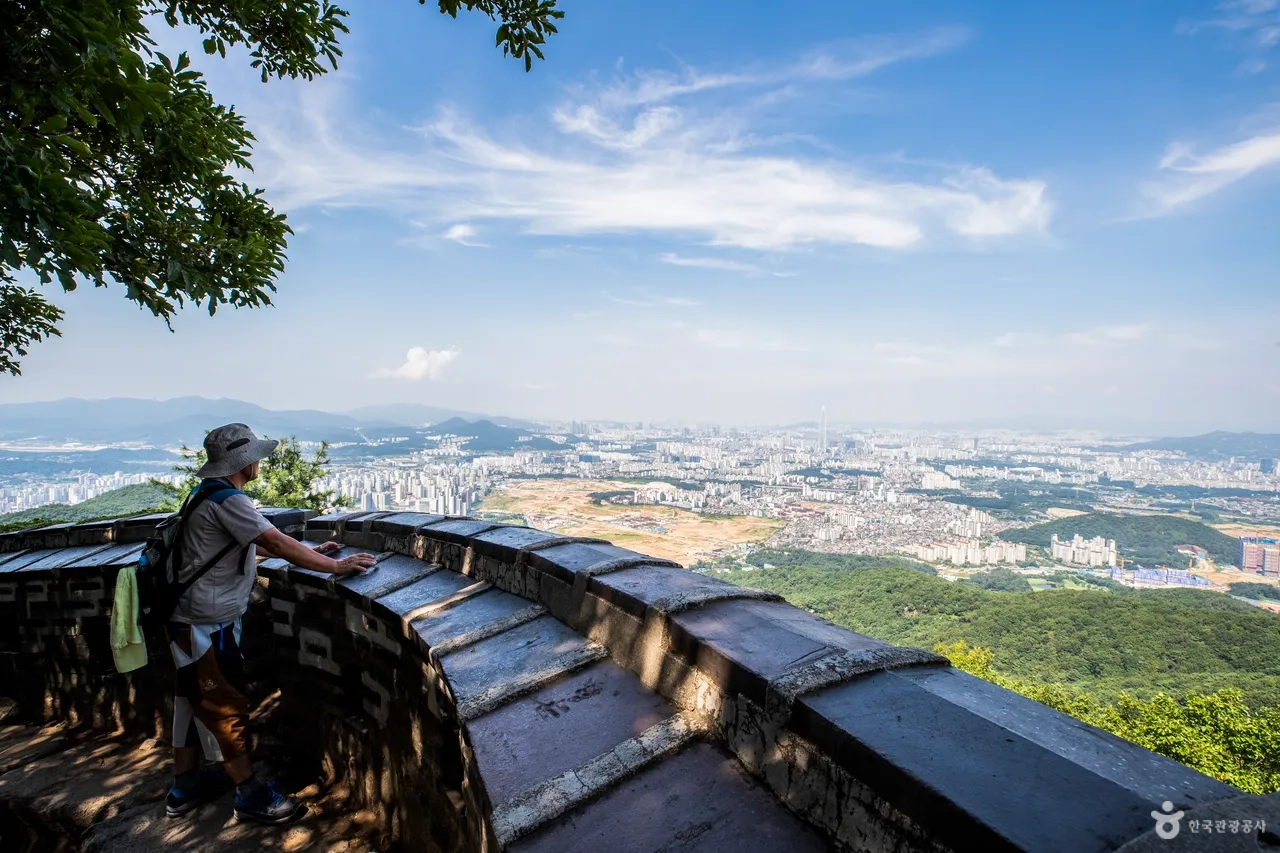
Namhansanseong is one of the most important historic fortress sites near Seoul. It is not only a mountain fortress. It was designed as an emergency capital for the Joseon dynasty, which gives the site a much larger historical meaning. If you want a destination that combines history, walking, and scenery, Namhansanseong is one of the strongest choices near Seoul.
What makes Namhansanseong memorable is the way history and landscape work together. The fortress walls follow the mountain ridges, and the route naturally opens toward gates, lookout points, and wooded trails. Because of that, Namhansanseong feels more like a full historic landscape than a single landmark.

Why Namhansanseong matters so much
Namhansanseong is a UNESCO World Heritage site and one of Korea’s most important fortress cities. UNESCO explains that it was designed as an emergency capital for the Joseon dynasty and that it reflects military, civil, and religious functions inside one fortified mountain city. That larger historical role is what makes Namhansanseong different from an ordinary fortress wall walk.
It is also meaningful because it shows how defense strategy changed in East Asia during the early modern period. The fortress design reflects a combination of Korean, Chinese, and Japanese influences, together with changes brought by firearms. That gives Namhansanseong importance not only in Korean history but also in the broader history of fortification.


What to notice first at Namhansanseong
The first thing to notice is the scale of the site. Namhansanseong is not a single gate or one short wall section. The fortress stretches across mountain terrain, and the wall line continues for a long distance. That makes the experience feel more like exploring a fortified mountain city than visiting one isolated monument.
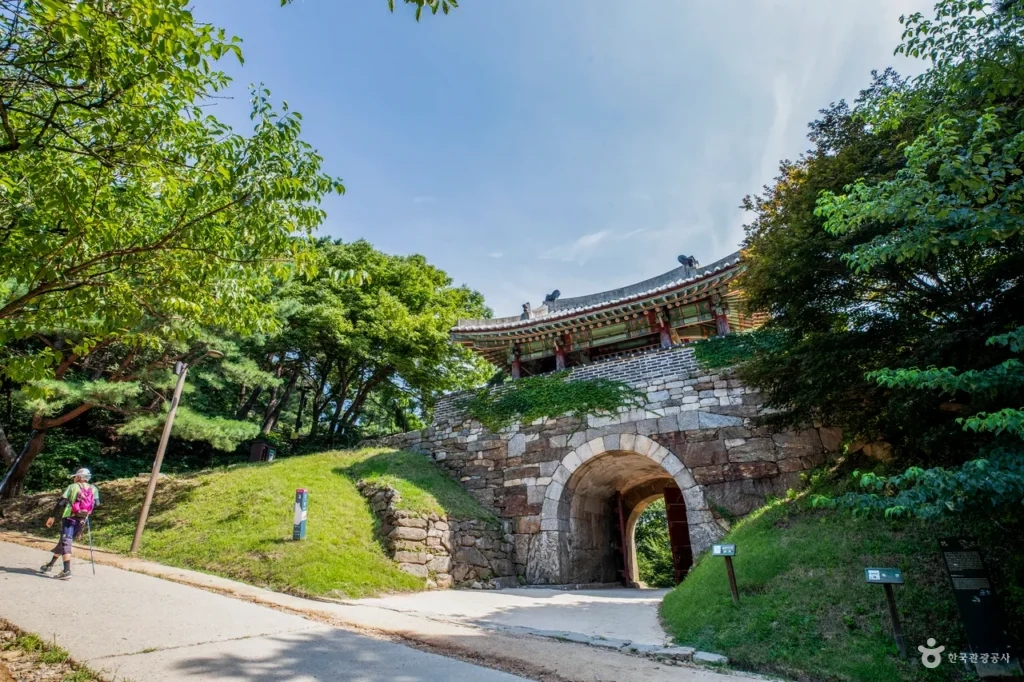
The second thing to notice is how the main landmarks connect to the walking routes. Gates, command posts, temple sites, and viewpoints are spread through the fortress area. This means that Namhansanseong works best when you walk it as a route rather than trying to treat each point as a separate stop.
How to plan a practical Namhansanseong route
A practical first route is the official course that begins at Sanseong Rotary and continues to the North Gate, West Gate, Sueojangdae Post, Cheonjusa Temple Site, and South Gate before returning. This route works well because it covers both the fortress wall atmosphere and one of the most important command points in the complex.
Namhansanseong also has multiple official trail options, so visitors can choose a shorter or longer route depending on time and energy. If your goal is a balanced first visit, it is usually better to focus on one representative loop rather than trying to cover too much of the entire fortress in one trip.

Why Namhansanseong stays memorable
Many heritage sites are remembered for one building or one view. Namhansanseong is remembered for the overall experience. The walls, forested mountain paths, gates, and viewpoints build a steady sense of place. That makes the site feel larger in memory than a standard historic attraction.
It also remains memorable because the setting still feels natural. Even though it has major historical importance, Namhansanseong does not feel separated from the mountain. The fortress and the landscape still appear closely tied together, which adds to the experience of walking there.

Useful information before visiting Namhansanseong
Namhansanseong is located at 731 Namhansanseong-ro, Namhansanseong-myeon, Gwangju-si, Gyeonggi-do. Official tourism information lists Namhansanseong Fortress as open 24 hours, open all year round, with free admission. Parking is available.
Some facilities inside the fortress area operate on separate schedules. Official tourism information lists Namhansanseong Haenggung separately, with different hours and a ticket fee. If you plan to include the temporary palace, checking its current schedule before departure is a good idea.
Closing thoughts
Namhansanseong is one of the most rewarding historic walking destinations near Seoul. It combines UNESCO-level history with mountain scenery and flexible trail planning. If you want a place where history feels large and physical rather than distant, Namhansanseong is well worth adding to your itinerary.
It works especially well for travelers who enjoy walking and layered heritage sites. Instead of offering one quick photo stop, Namhansanseong gives you a route, a landscape, and a deeper sense of historical scale.

Leave a Reply
You must be logged in to post a comment.