


The Seokguram Main Buddha is the central statue that first draws your attention at Seokguram Grotto in Gyeongju. It is regarded as one of the greatest masterpieces left by 8th-century Silla, and the entire space of Seokguram is arranged around this statue. UNESCO also describes Seokguram as a masterpiece of East Asian Buddhist art, formed by the giant Buddha facing the East Sea together with the surrounding sculptures.
This statue is not simply a large Buddha image. It is the key element that completes the entire atmosphere of Seokguram. The Cultural Heritage Digital Service also explains that the calm appearance of the Main Buddha deepens the mysterious mood of the whole grotto. In fact, when standing before it, what comes first is not grandeur, but a quiet sense of focus.
Why the Seokguram Main Buddha Is Special
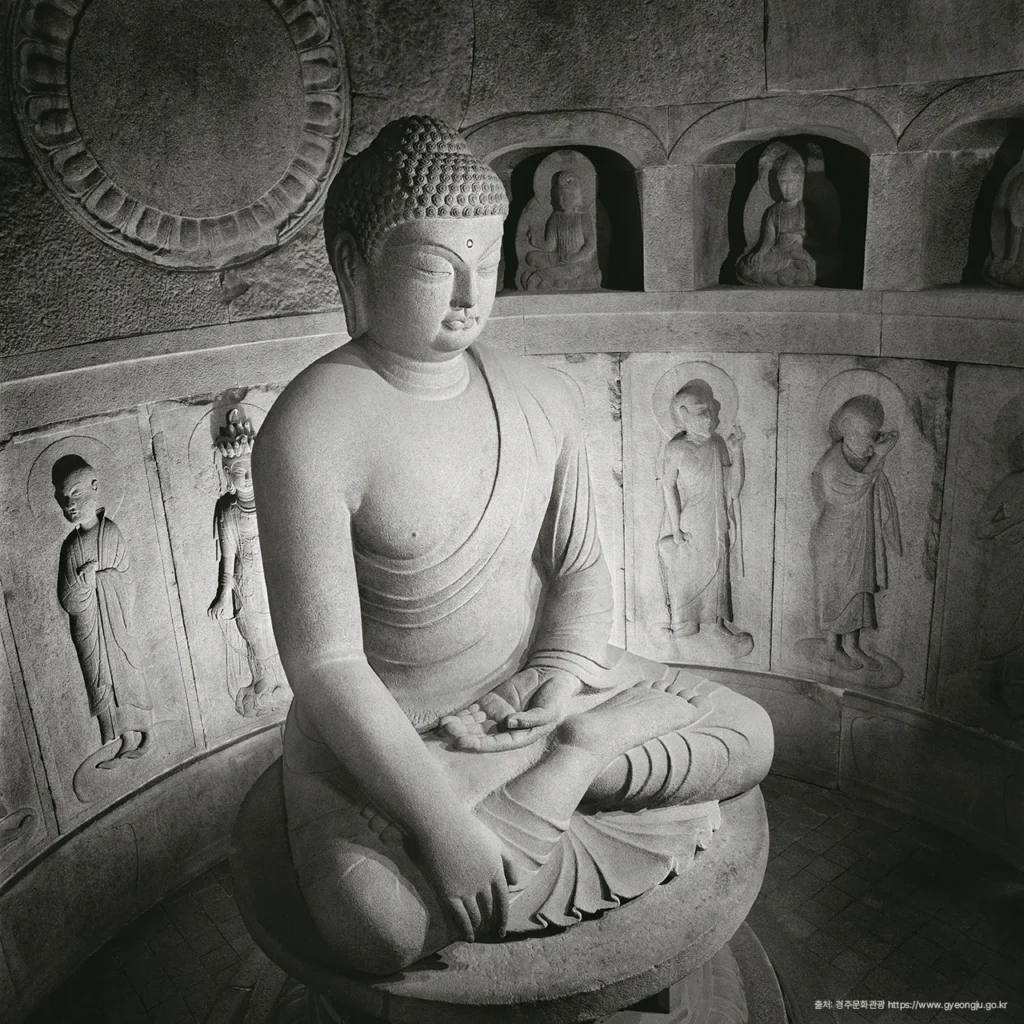
The most distinctive feature of the Seokguram Main Buddha is the clarity of its posture and symbolism. UNESCO explains this figure as a seated Buddha facing the sea, identified as Sakyamuni, with the right hand touching the earth in the bhumisparsha mudra and the left hand resting in meditation. Because of this, the statue is understood not simply as a seated Buddha, but as an image symbolizing the moment of enlightenment.
Another important point is the high level of sculptural perfection. According to the Korea Heritage Service, the Main Buddha is a work completed with mature carving techniques and realistic expression. Its natural and serene face, balanced body proportions, and restrained dignity come together in remarkable harmony.
What to Look for When Viewing the Main Buddha
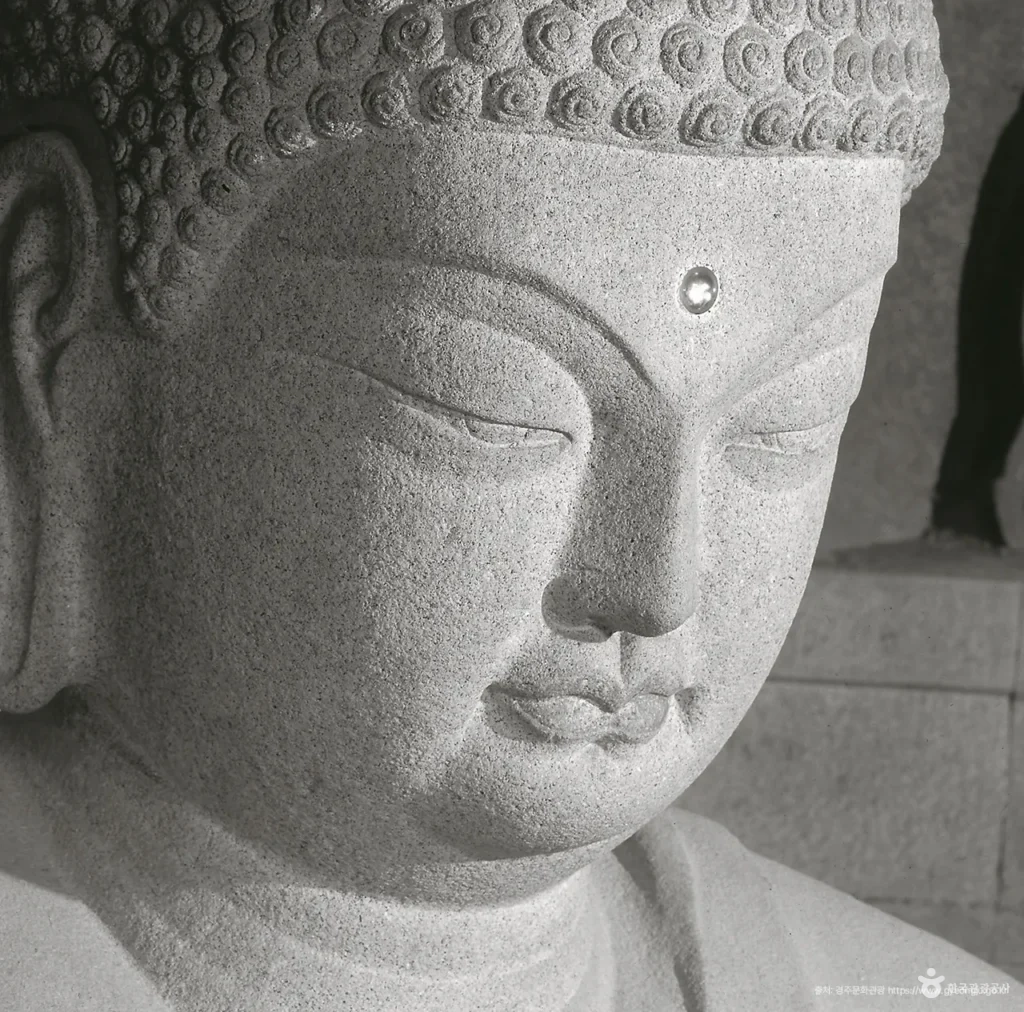
The first thing to notice is the face. Rather than strong emotion, the face of the Seokguram Main Buddha reveals a deep sense of peace. The Korea Heritage Service also describes it as the most ideal image, holding a profound and noble state of mind. That is why this statue is not so much overwhelming as it is increasingly impressive the longer you look at it.
The hand gestures are also essential to observe. The right hand points toward the earth, while the left hand rests on the knee. This mudra is interpreted as the posture symbolizing the moment when Sakyamuni attained enlightenment. Knowing this makes it easier to see that the Main Buddha is not just a sculptural object, but a symbolic work capturing a central moment in Buddhism.
The direction in which the Main Buddha is placed is also interesting. UNESCO and Gyeongju tourism guides explain that the statue faces toward the sea. When visiting Seokguram, it is more impressive to consider not only the statue itself, but also its placement high on Tohamsan Mountain and its orientation toward the sea.
Why the Main Buddha Is the Center of Seokguram
Seokguram is not a space containing only one Buddha statue. UNESCO explains that gods, bodhisattvas, and disciples are carved around the Main Buddha in both relief and fully sculpted forms. The Main Buddha holds the center, while the surrounding sculptures expand its meaning. That is why Seokguram feels less like a single statue and more like one complete visual and spiritual scene.
Heritage-related descriptions also explain that the interior of Seokguram is an artificial stone grotto created around the Main Buddha, with the entire group of sculptures together forming one of the highest achievements of Buddhist sculpture. In other words, the Main Buddha is not just one part of Seokguram, but the central axis for understanding the entire grotto.
Its Value as a Silla Buddhist Sculpture
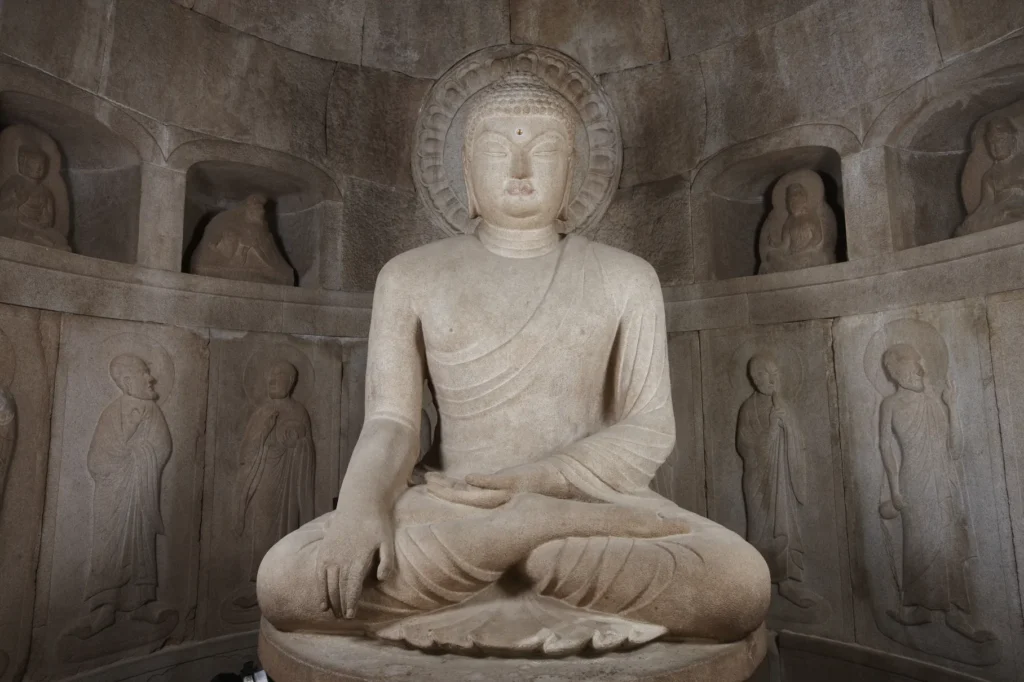
The Seokguram Main Buddha is often cited as one of the finest examples of Silla Buddhist art. UNESCO regards the sculptural group of Seokguram as a masterpiece of East Asian Buddhist art. The Korea Heritage Service also describes Seokguram as a supreme masterpiece in which architecture, geometry, religion, and art are organically combined.
For this reason, the Main Buddha is not just a famous statue. It is closer to a symbol that most powerfully condenses the aesthetic sense and spiritual world of Silla in a Gyeongju journey. Another major charm of this statue is that balance and restraint leave a stronger impression than flashy decoration.
Useful Information Before Your Visit
At present, the interior of Seokguram is not viewed from close range. According to the Cultural Heritage Digital Service, concerns about temperature and humidity control during public access led to viewing through a glass wall starting in 1976. As a result, visitors today see the Main Buddha from a set distance, taking in the full atmosphere of the grotto rather than viewing the statue up close.
According to Gyeongju tourism information, visiting hours are from 9:00 AM to 6:00 PM in the summer season, from 9:00 AM to 5:30 PM in October, and from 9:00 AM to 5:00 PM in winter. It is open year-round, and admission is free. As operating hours may change, it is safest to check the latest notice before visiting.
Conclusion
The Seokguram Main Buddha is one of the most memorable sculptures in Gyeongju. Its calm expression, symbolic hand gestures, refined proportions, and harmony with the entire Seokguram space are all deeply impressive. If you want to experience the essence of Silla Buddhist art in a single scene, the Seokguram Main Buddha is an especially rewarding highlight.

Leave a Reply
You must be logged in to post a comment.